Sorry, menu could not be loaded

Research

Studying media informatics

Always wanting to enhance my skills I attended to FELD workshop with Ulf Langheinrich at ICAS festival 2015. For DAVE Festival I organized DAVE Workshop Camp with Electric Indigo, Thomas Wagensommerer and Robert Henke at University of Music in Dresden 2017 and 2018. In 2024 Hellerau - Center of European Arts invited me to a workshop about 3D scanning objects using LIDAR scanners to find the digital me.
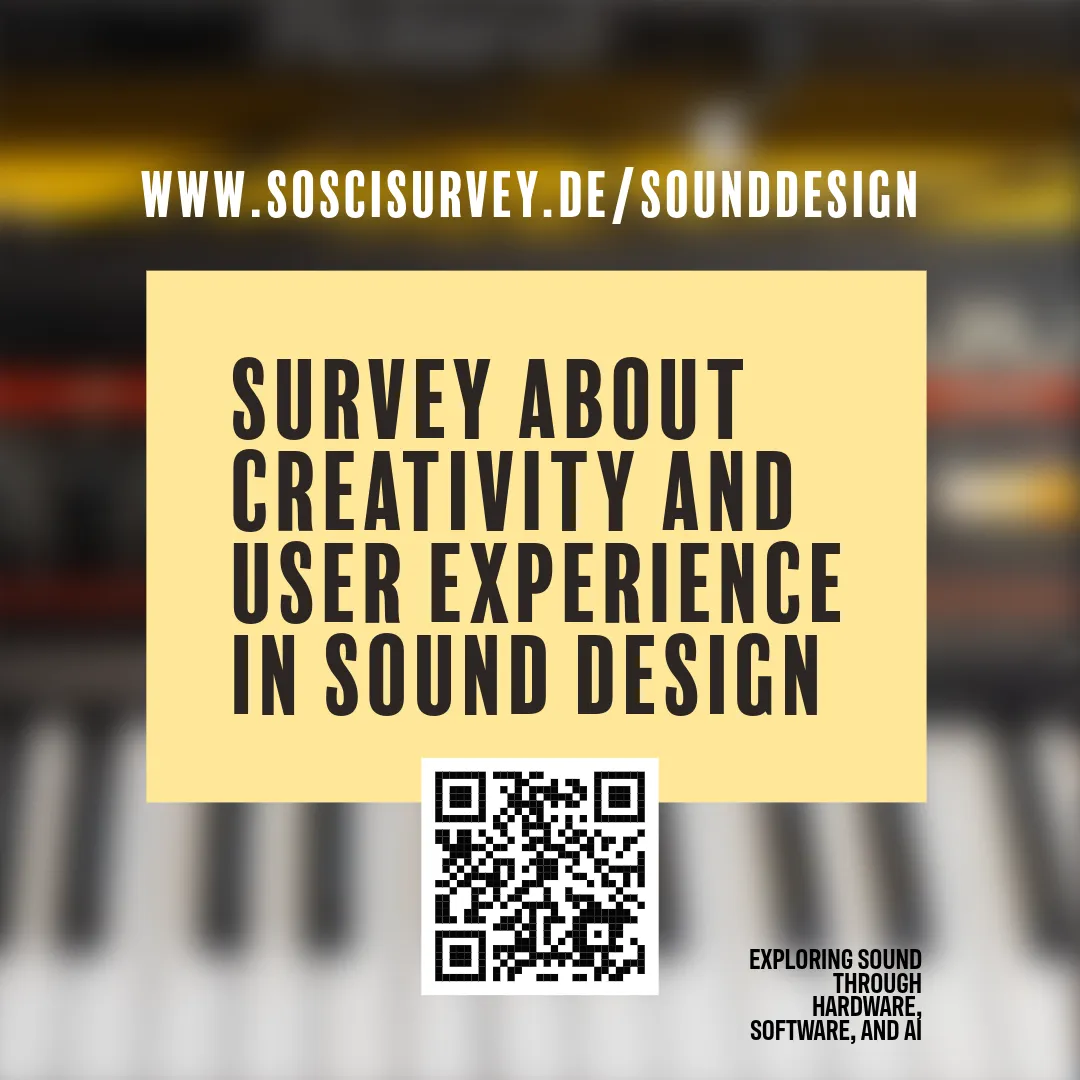
In 2022 I started studying media informatics at IU Internationale Hochschule. As part of my studies, I did a project on user interface design about DAVE Festival website. I also looked at the influence of AI on music and the influence of music streaming on mental healt of music listeners. For 2025 I was invited to write a book article on How to Bandcamp, Spotify and YouTube - Basics of digital music distribution. The book has been published on Springer / Gabler at the end of 2025.

Talk: Music streaming – curse or blessing?

people looking on a big screen

As part of the DAVE Festival in November 2025, Anika Jankowski of Oh My Music! and I discussed with the audience what an ideal platform for music streaming of the future might look like.

Listening to music has a positive influence on mental health. In contrast to the rather positive view of music streaming from the perspective of music listeners, the picture is somewhat different from the perspective of music creators. Topics such as dependence on playlist placements, the generation and distribution of revenue, adaptation of music to the conditions of the platforms and new listening habits are discussed.

We summarised the results of our public talk in an interview for DAVE Radio. Listen to it on Soundcloud.

Photo credit: Raphal Sinning / DAVE e.V. 2025

Listen to the Interview with Anika Jankowski and Oliver Hartmann on DAVE Radio

Book Article: Basic Of digital Music distribution

There are many ways to distribute music digitally. Music consumption is increasingly shifting towards usage rather than ownership. My article compares Spotify's streaming service with Bandcamp's ‘fair trade music platform’ model and YouTube's Content ID system for recognising and remunerating music recordings in videos.

In conclusion, digital music distribution offers music creators many opportunities to distribute their music. The multitude of music platforms differ in terms of their exploitation models. Music listeners are increasingly using streaming to consume music. Although this can generate revenue in the long term, success depends on factors such as placement in playlists or the music platform's distribution model.

Bandcamp offers an alternative with its ‘Fairtrade Music Policy’. As a video platform, YouTube not only offers opportunities for the visual presentation of music, but also provides rights exploitation through participation in advertising revenue with its Content ID.

The article has been published in the book 'Vermarktungsstrategien für digitale Medien' at Springer / Gabler Publishing in November 2025. Many thanks to Prof. Dr. Sybille Kunze and Prof. Dr. Gabriele Schuster of IU - Internationale Hochschule for the invite.

Get the book from Springer Link:

Vermarktungsstrategien für digitale Medien

The Influence of music streaming on mental health of music listeners

Music is a cultural asset enjoyed by many people around the world. Listening to music can have both positive and negative effects on physical health. Music consumption is increasingly taking place via streaming. The effects of music streaming on a person's mental health depend on the context, musical experiences and preferences, and well-being. Important features of music streaming are the extensive music catalogue of music platforms, barrier-free access and constant availability.

During the coronavirus pandemic, many people used music streaming to reduce anxiety, stress or depression. Live video streams of concerts gained in popularity during the coronavirus pandemic as they created a stronger sense of community and counteracted loneliness.

Algorithmic playlists enable access to music based on mood and personal preferences. Sensors and remote services can be used to collect data from the environment to generate context-based playlists. The analysis of well-being, preferences and context-based data is increasingly based on AI. However, not all users are aware of the use of AI on music platforms, and it presents various challenges.

Extensive listening can exacerbate a negative state of mind. Malfunctions or unexpected behaviour of the technology can also have a negative impact on well-being and mental health. Users have also reported a risk of addiction.

The findings of studies on the effects of music streaming on mental health during the coronavirus pandemic offer a field of research. The question arises as to how the findings can be used in music therapy to develop digital treatment methods. One research question could specifically examine the use of playlists in music therapy. Another research question could examine the applicability of the musical experiences of music listeners to other crises. Furthermore, the conditions for experiencing a state of flow while streaming could be investigated.

Further research is needed to examine the aftermath of the coronavirus pandemic on music consumption and its possible consequences not only on individual health but also in a societal context. One research question could be how culture and music consumption behaviour has changed after the coronavirus pandemic. These findings can also serve as a starting point for the cultural and music industry to create new and interesting cultural and music offerings in both the offline and online worlds.

Thanks to Dr. Florian Perst of studium unplugged for scientific support on how to write a literature analysis.

Home